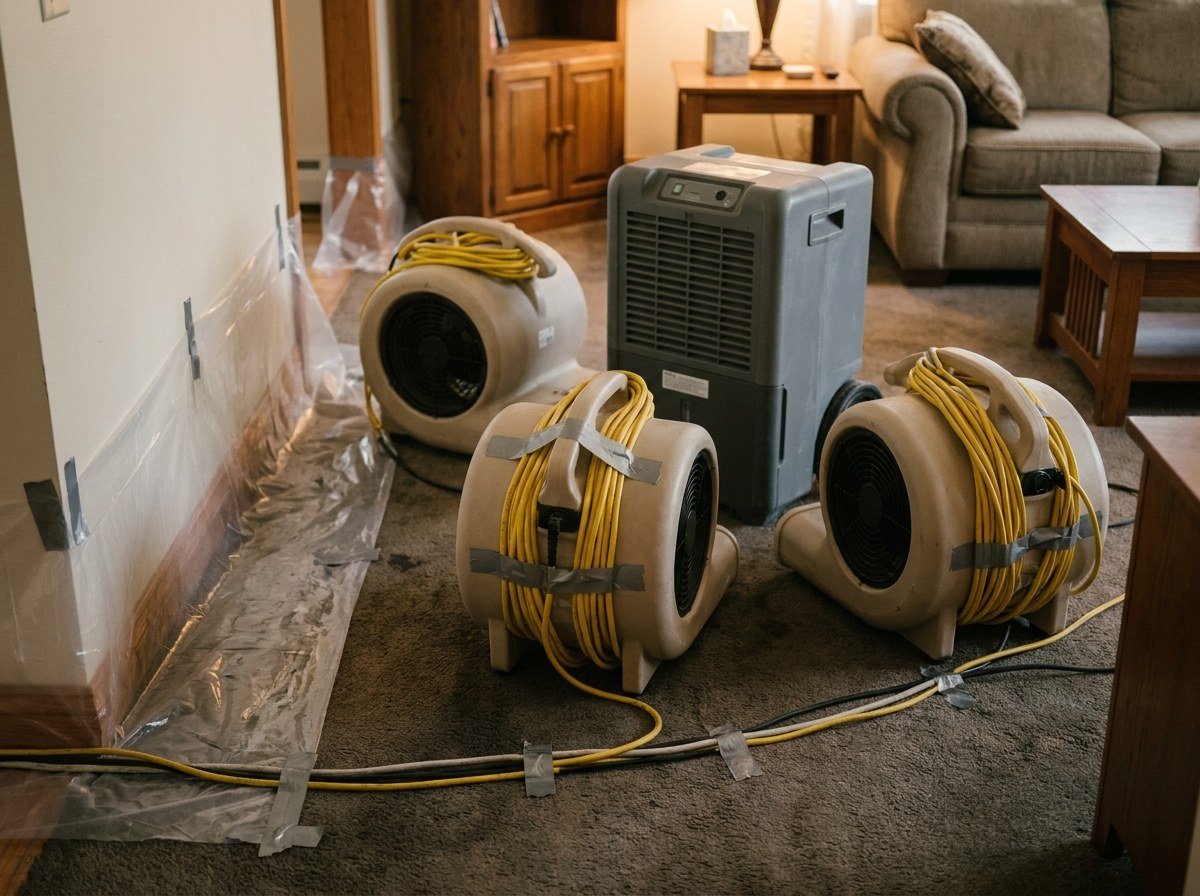
Before restoration help arrives, focus on stopping the water, keeping people away from electrical hazards, moving light belongings, and documenting the loss. Dry only what is safe and appropriate for the water type. Aggressive cleanup can spread contamination or hide the source.
What can you safely do before a restoration professional arrives?
- Stop the source. Close a fixture valve or the main shutoff only if it is dry and accessible.
- Keep electricity and water apart. Do not use cords, appliances, outlets, or a shop vacuum in wet areas. Do not enter water near a panel.
- Separate clean from contaminated water. If the water came from a sewer, drain, toilet, sump overflow, or outside flood, keep people and pets out and avoid fans that can spread droplets.
- Move light contents. Place small furniture, boxes, and rugs in a dry area. Wear gloves when handling wet materials and wash hands afterward.
- Remove a small amount of clean surface water. Towels or a wet vacuum designed for water may help in an electrically safe room. Stop if water is spreading or the equipment is not rated for the task.
- Lower humidity. If the room is safe and the water is clean, a dehumidifier may help. Keep doors and windows appropriate to outdoor humidity and weather; more airflow is not always better.
Why ordinary fans and household vacuums are not a complete drying plan
Air movement changes the surface, but moisture can remain under carpet, inside wall cavities, beneath cabinets, and in subfloors. A household vacuum is not designed for standing water and can create a shock hazard. Fans can also move contaminated particles through a room. The right equipment depends on the source and materials involved.
Professional drying is a measured process. A technician may use moisture meters, air movers, and dehumidification while checking how materials respond over time. Read our guide to how restoration companies measure moisture and the structural drying service guide.
When should you stop DIY cleanup?
Stop and ask for help when water is near electrical equipment, has entered a wall or ceiling, has soaked insulation, comes from sewage or outside flooding, or has affected more than a small manageable area. Also stop if you are not sure whether a material can be cleaned, if the floor feels soft, or if a person in the home has a health condition that makes mold or contaminated water a greater concern.
Drying a room without fixing the source is like mopping while a faucet is open. Find the cause first. An appliance leak, roof leak, frozen pipe, and floor drain backup each needs a different response.
What should you document while the area is still wet?
Take wide photos that show the room, close-ups of wet materials, and a short walk-through video. Photograph water lines on walls and furniture, damaged contents, the source, and any temporary measures. Write down when you found the water, what was running, recent weather, and who was called. A clear record helps a restoration professional understand the loss and helps you speak accurately with the insurer.
The EPA recommends drying water-damaged areas and items within 24 to 48 hours when possible. That guidance is a reason to call early, not a reason to take unsafe shortcuts.
Frequently asked questions
It may help after a small clean-water leak when the room is electrically safe, but it does not replace source control, extraction, or checking moisture inside materials.
Do not cut into walls or ceilings unless you know the area is safe and understand what is behind the surface. Hidden wiring, plumbing, insulation, and contaminated water can make the task hazardous.
Sources and further reading
U.S. EPA: A Brief Guide to Mold, Moisture and Your Home — drying and humidity guidance.
U.S. EPA: Dealing with Debris and Damaged Buildings — wet-material and contaminated-water precautions.