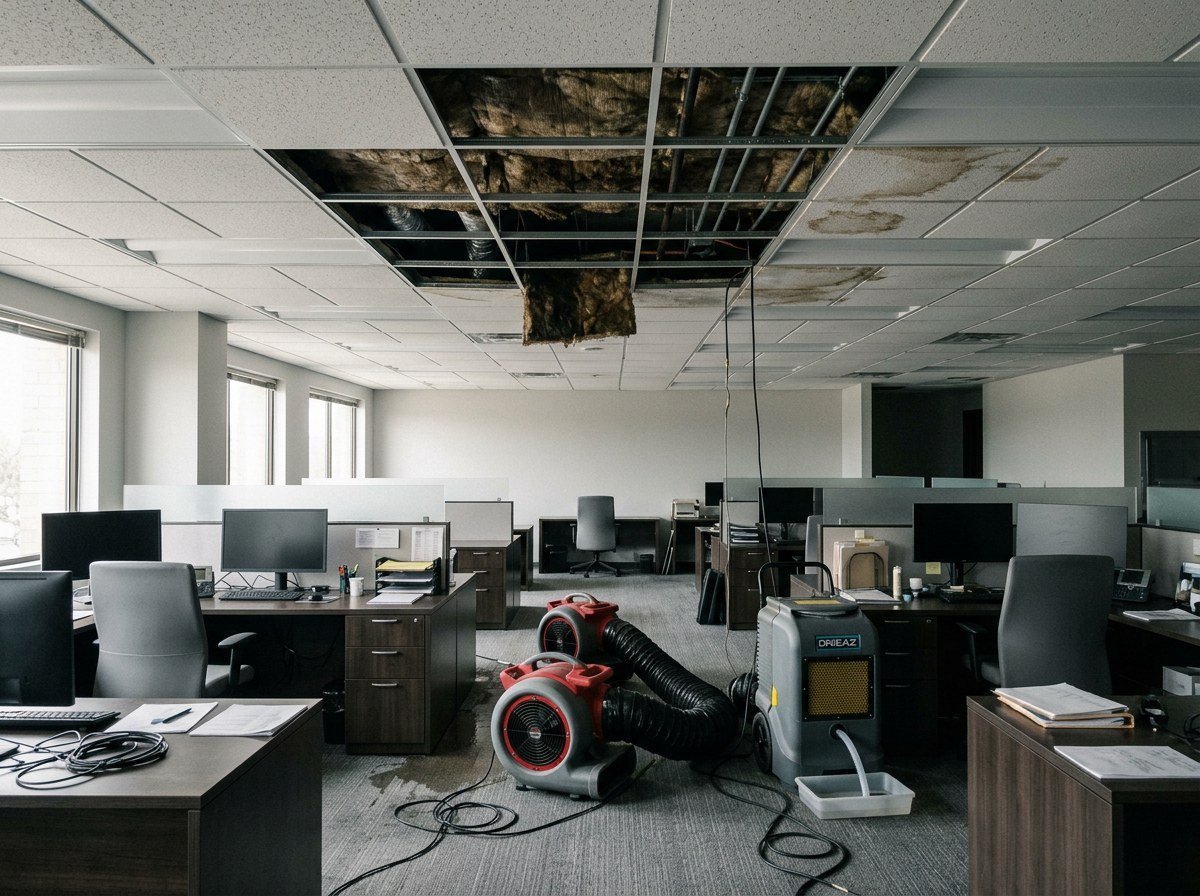
A landlord's first-day water damage plan has two tracks: protect people and the building, then create a record that lets tenants, owners, insurers, plumbers, and restoration professionals act from the same facts. Put safety and source control first, then communicate what is known and what is still being assessed.
The first-day plan for a rental property water loss
- Check for immediate safety issues. Ask whether occupants can safely enter, whether water is near electrical equipment, and whether the source is sewage, a drain backup, or outside floodwater.
- Stop or isolate the source. Send a plumber or maintenance contact when the problem is plumbing-related. Do not ask a tenant to take an unsafe action.
- Preserve the record. Take photos and video in common areas and affected units. Record who found the loss, when it was reported, what rooms are affected, and what changed after the source was stopped.
- Give tenants a clear update. Say what is confirmed, what is being assessed, whether access is restricted, and how they should report additional damage. Avoid promising a move-in date or insurance outcome before the property is inspected.
- Coordinate access. Restoration work often needs repeated visits to monitor moisture and move equipment. Set a contact person, access window, and process for protecting tenant belongings.
- Separate emergency mitigation from permanent repairs. Extraction and drying stabilize the loss. Plumbing repair, demolition, rebuild, and cosmetic work may be separate scopes.
Why tenant communication affects the cleanup
A tenant may notice a smell, warped flooring, or a stain before anyone sees standing water. Those details can help locate the path of moisture. Ask for a timeline and photos, not a diagnosis. Save texts, emails, work orders, and receipts in the property file.
Tell tenants not to use wet outlets, move heavy furniture through standing water, or keep using an appliance that may be leaking. If the area is unsafe, say exactly which room or outlet is off limits and who to contact for an urgent change.
What records should a landlord keep?
- Initial report with date, time, unit, and source as described
- Photos and video before contents are moved
- Plumber, restoration, and electrician work orders
- Moisture readings or drying logs supplied by the restoration professional
- Tenant notices, access attempts, and accommodation records
- Inventory of damaged building materials and tenant-reported contents
- Invoices and receipts for temporary protection, cleanup, and alternate housing
A property manager does not need to make a technical diagnosis in the first call. The useful handoff is a factual one: where water appeared, what was running, what rooms are affected, what is unsafe, and what has already been done.
When a loss affects more than one unit
Water can move through floor assemblies, shared walls, chases, and ceilings. Open the communication loop early with adjacent occupants and the building owner. Photograph common areas separately from unit interiors. If the loss involves a condo association or shared building system, follow the governing documents and notify the appropriate parties.
For office, retail, or restaurant properties, see the commercial water damage resource. For a tenant-facing checklist, link to apartment water damage reporting and the renter water damage guide.
What should landlords avoid promising?
Avoid promising that every item will be saved, that insurance will pay, or that a unit will be ready on a fixed date before the source and moisture conditions are known. Give updates as facts change. A careful sentence is often more useful than false certainty: “The source is stopped; the affected materials are being assessed; we will update you after the next inspection.”
Frequently asked questions
Responsibility depends on the lease, the cause, building systems, negligence, and the policies involved. Document the facts and get advice from the owner, insurer, or qualified professional.
Move only what is necessary for safety and access, with permission when possible. Photograph the condition first and keep a record of where items were placed.
Sources and further reading
U.S. EPA: A Brief Guide to Mold, Moisture and Your Home — moisture control for occupied spaces.
Indiana Department of Insurance: Insurance Claim Tips — documentation and temporary repairs.